
01
A private cluster
A root device onboards the others in person. New devices inherit settings through a chain of trust. Radios that were never onboarded are ignored.
Private mesh · no cell · no internet
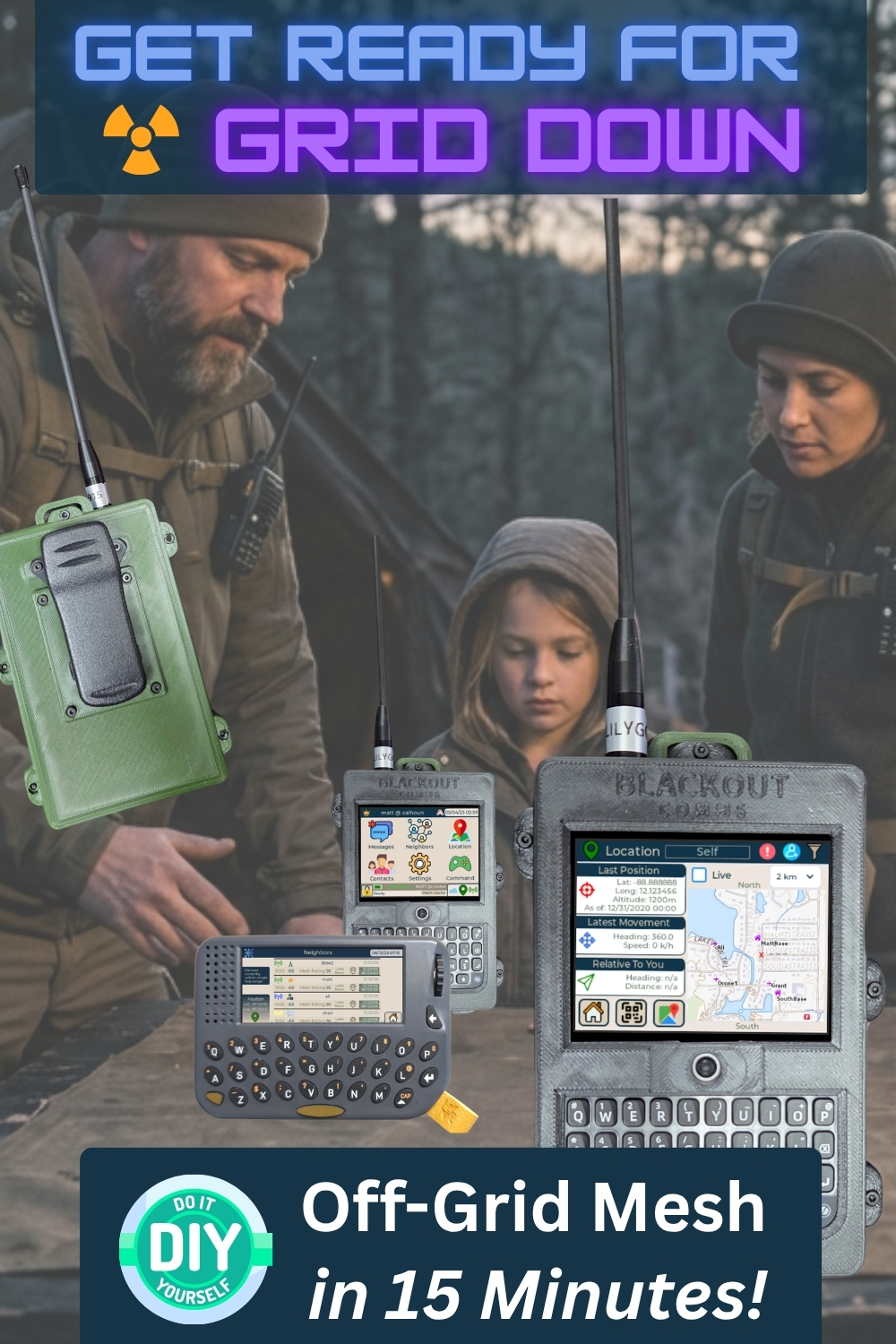
Blackout Comms is firmware for a trusted cluster of radios. They text, share location, and remember one another over LoRa — even when a device is out of range or powered off.
What it is
Blackout Comms is a protocol and embedded firmware from Altware Development. It runs on the radio. There is no app store between you and the people you trust, and no background leak of position to a platform.
01
A root device onboards the others in person. New devices inherit settings through a chain of trust. Radios that were never onboarded are ignored.
02
Direct messages are encrypted so relays cannot read them. Everything is signed. If the other radio is off or out of range, the mesh holds the packet and keeps trying.
03
Mesh memory keeps last-known position, heading, speed, and battery, and passes that state around the cluster — including for devices that have powered off.
Who it's for
It is a local backup for a known group. Not a public chat channel, and not a replacement for calling emergency services when those still work. There are other civilian systems, but will they be reliable and private mesh comms for SHTF scenarios?
What makes it different
Plenty of civilian mesh tools relay whatever is in range right now. Blackout Comms is built around a closed cluster, hardware-held keys, and state that survives a radio powering off.
| Piece | How Blackout Comms does it |
|---|---|
| Trust | Onboard in person from a root device. No channel password typed into a phone. Devices outside the cluster are blocked. |
| Keys | Generated on the hardware. Not shown, not exported. Companion apps never receive them. |
| Messages | Direct messages use asymmetric encryption, so a relay cannot read what it forwards. Packets are signed with ECDSA and checked for freshness. |
| Airtime | The cluster hops LoRa channels on a key-dependent pattern. Direct exchanges can stripe packets across frequencies known to that pair. |
| Memory | Nodes keep and propagate last-known position, heading, speed, battery, and link quality. Direct messages retry for up to 24 hours. Broadcasts propagate for up to about 2 hours. |
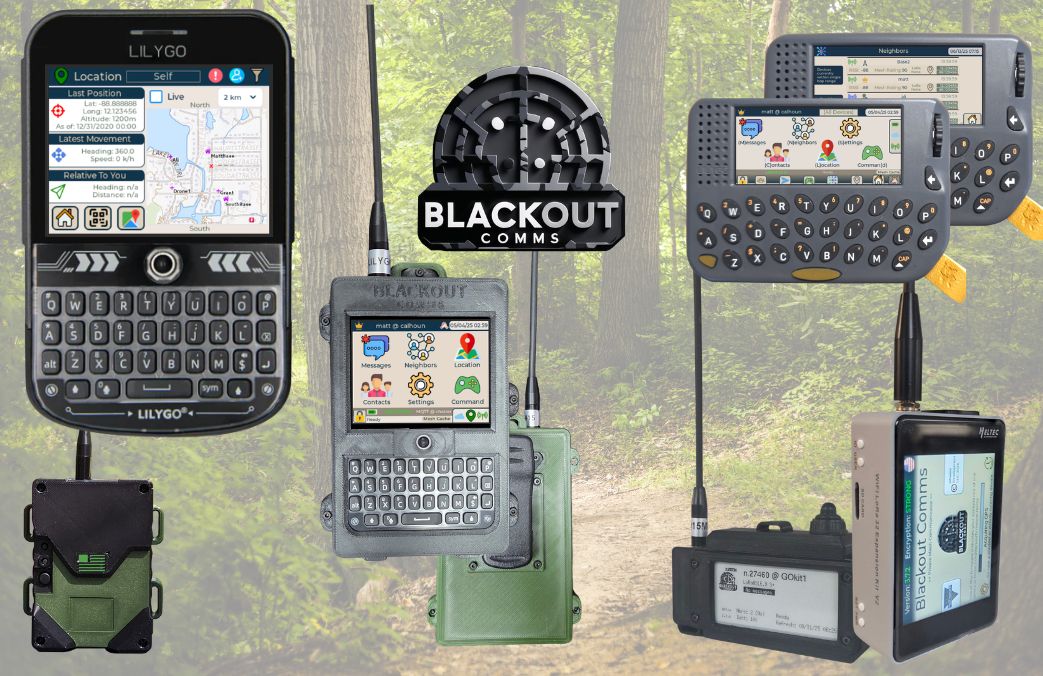
| Phone | Handhelds work on their own. Android Live and Overlook are wider views over Bluetooth. Encryption and routing stay on the radio. |
Hopping reduces collisions and makes casual interception harder. It is not a promise that a determined jammer cannot interfere. Follow the radio rules where you are, and use the USA or non-USA firmware consistently across the cluster.
The path in
The ecosystem starts on the radio. Apps come after the cluster exists.
01
Communicator builds for handhelds. Link builds for relays. Version 3.7.8, free to download from the firmware host.
02
Name it on a root communicator, then onboard each other device in range. Two radios are enough to start.
03
Blackout Comms Live on Android, or Overlook on a desk or cabin monitor. Both pair over Bluetooth. Keys stay put.
Start here
This site does not sell radios. Pick a supported board, flash it, and you are in the cluster. Configured kits, longer guides, and the protocol notes live on the main Blackout Comms site.
Also useful